

Saw this crop up again today and thought a post that tackles the topic properly would be worth having. The usual claim is that reta behaves the same as tirzepatide under 4mg, or that the glucagon agonist only "kicks in" once you reach that level.
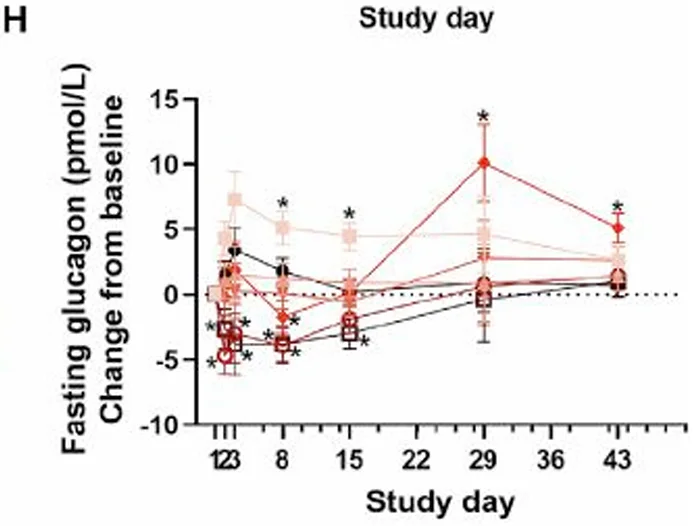
The 4mg figure is a myth kept alive by one person misreading a phase 1 trial. Participants in that trial got single reta doses and had various markers tracked afterwards. The 3mg arm was the lowest one where serum glucagon dropped meaningfully below its own baseline, and somewhere along the way that got rounded up to 4mg, because 3mg dosing never carried into the phase 2 work.

Why that reasoning does not hold up:
1: One 4mg hit lands at a peak that is roughly what a weekly 2mg routine produces (drugs accumulate over time). A weekly 4mg routine would instead swing from about 8mg total down to 4mg just before the next shot. Comparing one injection against a weekly schedule is not apples to apples.
2: Nothing says every individual will see glucagon drop at the same dose, because insulin and glucagon vary a lot between people (and baselines can run high in someone who is obese or diabetic). A person with less insulin resistance would probably hit that same result on lower reta dosing, whereas a more insulin resistant person would need a bigger dose before it shows. On top of that, the target keeps moving as treatment goes on, since insulin resistance itself changes too.
3: Serum glucagon on its own is not a standalone metric. Metabolism is governed by the ratio of insulin to glucagon. Any GLP already nudges baseline insulin up a little. So even before glucagon agonism enters the picture, the body will naturally push glucagon up in reply to a GLP. You can see exactly that in the same phase 1 trial, where glucagon rises on a very low reta dose. So reading "unchanged" glucagon at a low dose misses most of the story. The better reading is "balanced," because that is the point where the glucagon agonist is offsetting the GLP-1 RA’s tendency to raise glucagon. 4mg is merely where the glucagon agonist started to win.
Worth adding:
Worth pointing out as well that 99% of influencers have no clue what a shift in glucagon level even signifies. Lowering glucagon is not the aim with reta. A GLP-1 agonist can be read as counterfeit GLP-1, and in the same spirit the glucagon agonist in reta is "counterfeit glucagon." A lower reading for real glucagon in blood matters because it tells you the body has decided glucagon is running too high (it senses all that counterfeit glucagon) and is dialling back how much it makes. It means the body is both being "fooled" by the counterfeit glucagon and convinced that current glucagon levels are excessive.
The normal pattern is that glucagon climbs when you have gone several hours without food, then settles back after a carb-containing meal. A glucagon agonist overrides that and convinces the body the levels never come down. In practice this appears to keep metabolism elevated, and to drive other processes that overall look helpful for people with obesity and/or diabetes and that support weight loss, though I would not claim the precise biochemical reason for it is fully settled.
None of this means 4mg is a bad level or anything of the sort. It just means there is nothing magical or special about that number compared with any other.
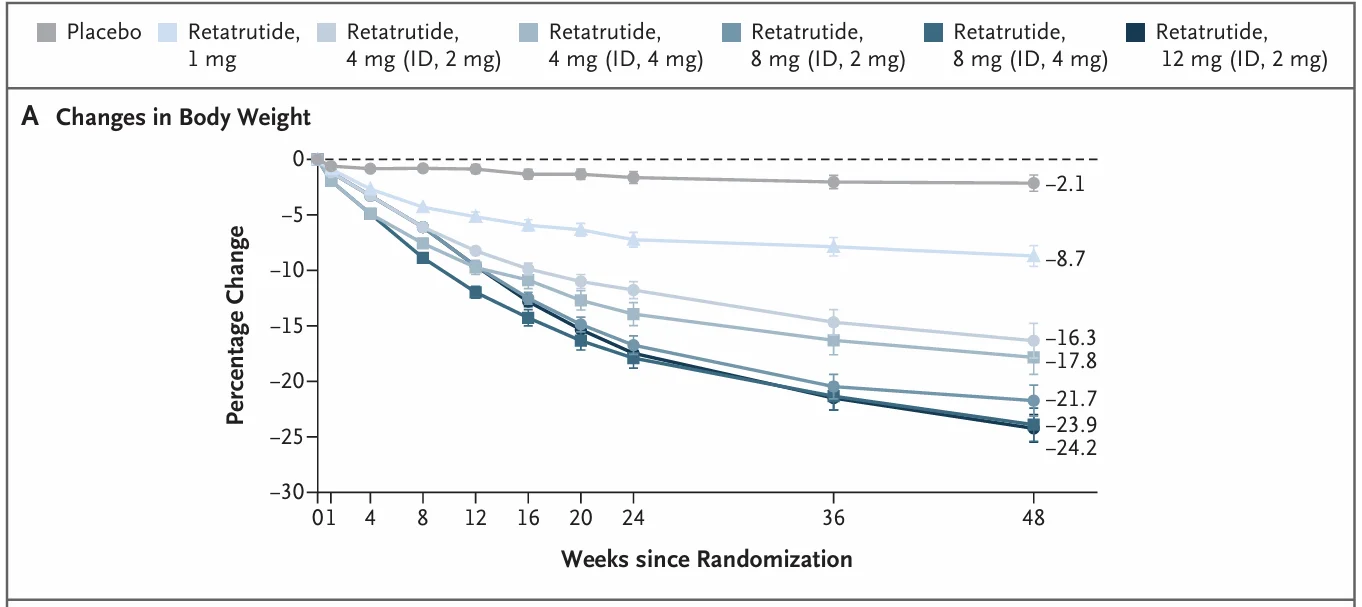
The 4mg figure is a myth kept alive by one person misreading a phase 1 trial. Participants in that trial got single reta doses and had various markers tracked afterwards. The 3mg arm was the lowest one where serum glucagon dropped meaningfully below its own baseline, and somewhere along the way that got rounded up to 4mg, because 3mg dosing never carried into the phase 2 work.
Why that reasoning does not hold up:
1: One 4mg hit lands at a peak that is roughly what a weekly 2mg routine produces (drugs accumulate over time). A weekly 4mg routine would instead swing from about 8mg total down to 4mg just before the next shot. Comparing one injection against a weekly schedule is not apples to apples.
2: Nothing says every individual will see glucagon drop at the same dose, because insulin and glucagon vary a lot between people (and baselines can run high in someone who is obese or diabetic). A person with less insulin resistance would probably hit that same result on lower reta dosing, whereas a more insulin resistant person would need a bigger dose before it shows. On top of that, the target keeps moving as treatment goes on, since insulin resistance itself changes too.
3: Serum glucagon on its own is not a standalone metric. Metabolism is governed by the ratio of insulin to glucagon. Any GLP already nudges baseline insulin up a little. So even before glucagon agonism enters the picture, the body will naturally push glucagon up in reply to a GLP. You can see exactly that in the same phase 1 trial, where glucagon rises on a very low reta dose. So reading "unchanged" glucagon at a low dose misses most of the story. The better reading is "balanced," because that is the point where the glucagon agonist is offsetting the GLP-1 RA’s tendency to raise glucagon. 4mg is merely where the glucagon agonist started to win.
Worth adding:
Worth pointing out as well that 99% of influencers have no clue what a shift in glucagon level even signifies. Lowering glucagon is not the aim with reta. A GLP-1 agonist can be read as counterfeit GLP-1, and in the same spirit the glucagon agonist in reta is "counterfeit glucagon." A lower reading for real glucagon in blood matters because it tells you the body has decided glucagon is running too high (it senses all that counterfeit glucagon) and is dialling back how much it makes. It means the body is both being "fooled" by the counterfeit glucagon and convinced that current glucagon levels are excessive.
The normal pattern is that glucagon climbs when you have gone several hours without food, then settles back after a carb-containing meal. A glucagon agonist overrides that and convinces the body the levels never come down. In practice this appears to keep metabolism elevated, and to drive other processes that overall look helpful for people with obesity and/or diabetes and that support weight loss, though I would not claim the precise biochemical reason for it is fully settled.
None of this means 4mg is a bad level or anything of the sort. It just means there is nothing magical or special about that number compared with any other.


