
5byfive
Explorer
Sharing these was cleared. Sure, a lot of us use filters, so it isn't catastrophic, but it fits into a wider trend of QC problems we keep running into. Endotoxin testing was done on a few of them and the results came back low.

Follow along with the video below to see how to install our site as a web app on your home screen.
Note: This feature may not be available in some browsers.


These come from 3P testing; unless you paid to be part of the testing group, seeing them at all is unlikely.CandyCap said:
Curious that testing happened in December and February, yet the findings only surface now?
FNG33 said:
These come from 3P testing; unless you paid to be part of the testing group, seeing them at all is unlikely.CandyCap said:
Curious that testing happened in December and February, yet the findings only surface now?
During one group buy I took part in, every TFC T30, T40, T60 and R30 lot came back failing sterility across that same window. The counts were not especially high.
Sterility is never assured. In a few cases, as I recall, either a small discount was offered or refunds went out before the final shipment.

That name is new to me.Dos-Dox said:
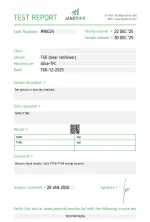
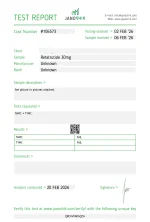
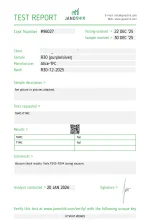
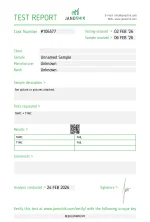
Fresh results from testing have just been posted on TG as a notice to the community. Taken one at a time, none of them would raise too much concern, but when viewed together, the pattern surrounding this supplier points to wider QC problems.
The group that paid for the testing and put out the notice gave permission to share it:
Janoshik Analytical
Janoshik Analytical
Janoshik Analytical
Edit to clarify the COAs show undisclosed but according to the owner, they are Alice TFC.
I hadn't come across it either, though it appeared in a group where different vendors get talked about without restriction. I requested the go-ahead to repost it to a wider audience from that thread.BNLFL said:
That name is new to me.Dos-Dox said:
Fresh results from testing have just been posted on TG as a notice to the community. Taken one at a time, none of them would raise too much concern, but when viewed together, the pattern surrounding this supplier points to wider QC problems.
The group that paid for the testing and put out the notice gave permission to share it:
Janoshik Analytical
Janoshik Analytical
Janoshik Analytical
Edit to clarify the COAs show undisclosed but according to the owner, they are Alice TFC.
That's right. While the recent threads have already addressed this quite thoroughly, it's still worth restating for anyone who comes across it later once those other discussions have faded.Habibibi said:
Endotoxin results were reported only as ">10 EU/vial", which leaves the actual concentration unknown, and the figures Janoshik provides are essentially arbitrary.

The figure given is only an approximation, and as I've pointed out previously, it has often proven far off the mark. It is not something you should depend on at all. What can be stated with certainty is that the values exceed 10. Determining the actual concentrations will require a different assay that has been validated for the 10-1000 range.trojanpeptide said:
Per the Janoshik report at the link, the result comes out to roughly 25.1 EU per vial.
View attachment 9912

That's exactly correct! I had a NAD+ that Jano's initial test put at 26, and when the follow-up test came back it was 625 EU!!!Habibibi said:
The figure given is only an approximation, and as I've pointed out previously, it has often proven far off the mark. It is not something you should depend on at all. What can be stated with certainty is that the values exceed 10. Determining the actual concentrations will require a different assay that has been validated for the 10-1000 range.trojanpeptide said:
Per the Janoshik report at the link, the result comes out to roughly 25.1 EU per vial.
View attachment 9912
If you're getting 625 in one shot, that's not ideal. But if a single vial is split across 20+ doses, the per-dose amount ends up well under the threshold the FDA flags as dangerous, doesn't it?Gwynhwyfar said:
That's exactly correct! I had a NAD+ that Jano's initial test put at 26, and when the follow-up test came back it was 625 EU!!!Habibibi said:
The figure given is only an approximation, and as I've pointed out previously, it has often proven far off the mark. It is not something you should depend on at all. What can be stated with certainty is that the values exceed 10. Determining the actual concentrations will require a different assay that has been validated for the 10-1000 range.trojanpeptide said:
Per the Janoshik report at the link, the result comes out to roughly 25.1 EU per vial.
View attachment 9912
For my part, 1000mg split across 40 doses—or even just 20—is acceptable.jjir2026 said:
If you're getting 625 in one shot, that's not ideal. But if a single vial is split across 20+ doses, the per-dose amount ends up well under the threshold the FDA flags as dangerous, doesn't it?Gwynhwyfar said:
That's exactly correct! I had a NAD+ that Jano's initial test put at 26, and when the follow-up test came back it was 625 EU!!!Habibibi said:
The figure given is only an approximation, and as I've pointed out previously, it has often proven far off the mark. It is not something you should depend on at all. What can be stated with certainty is that the values exceed 10. Determining the actual concentrations will require a different assay that has been validated for the 10-1000 range.trojanpeptide said:
Per the Janoshik report at the link, the result comes out to roughly 25.1 EU per vial.
View attachment 9912
The FDA's limit is 5 EU/kg (2.2 lb) of body weight per hour. For someone around 80 kg (176 lb), that works out to about 400 EU per injection/dose.
Sure, having no endotoxin at all would be preferable. Still, these figures are usually reported per vial, and often the total only slightly goes past the level the FDA says might trigger a fever from just 1 injection.

The problem, as I see it, is that a single sterility failure usually doesn't amount to much of a red flag. So when a group puts one out in the open, the typical reaction amounts to "so what" or "this is exactly why I filter every time...blah blah." Whoever shared it ends up asking themselves why they went to the trouble at all.CandyCap said:
FNG33 said:
These come from 3P testing; unless you paid to be part of the testing group, seeing them at all is unlikely.CandyCap said:
Curious that testing happened in December and February, yet the findings only surface now?
During one group buy I took part in, every TFC T30, T40, T60 and R30 lot came back failing sterility across that same window. The counts were not especially high.
Sterility is never assured. In a few cases, as I recall, either a small discount was offered or refunds went out before the final shipment.
I get how third-party testing groups operate. That said, when a finding could pose a risk to health, they typically choose to make it public as a safety measure.
What makes you think that?Waterheater said:
Wouldn't endotoxins go up while it's sitting in the vial?
I think (that wasn't my post, I'm only guessing) the idea is that endotoxin levels would increase alongside bacterial growth, given that bacteria shed endotoxins.tubby said:
The problem, as I see it, is that a single sterility failure usually doesn't amount to much of a red flag. So when a group puts one out in the open, the typical reaction amounts to "so what" or "this is exactly why I filter every time...blah blah." Whoever shared it ends up asking themselves why they went to the trouble at all.CandyCap said:
FNG33 said:
These come from 3P testing; unless you paid to be part of the testing group, seeing them at all is unlikely.CandyCap said:
Curious that testing happened in December and February, yet the findings only surface now?
During one group buy I took part in, every TFC T30, T40, T60 and R30 lot came back failing sterility across that same window. The counts were not especially high.
Sterility is never assured. In a few cases, as I recall, either a small discount was offered or refunds went out before the final shipment.
I get how third-party testing groups operate. That said, when a finding could pose a risk to health, they typically choose to make it public as a safety measure.
On the other hand, once it turns into a recurring thing tied to one vendor and/or source (which is what happened in this instance), that can point toward bigger questions about how a given facility handles its finishing process, and the wider community may want to know about that. It's a bit like a friend catching a cold: you tell them to feel better, but you don't treat it as anything unusual. If that same friend instead catches their 6th cold in 5 months, you'd probably want to look into it more closely and say something.
What makes you think that?Waterheater said:
Wouldn't endotoxins go up while it's sitting in the vial?
This makes a strong case for either using BAC water, filtering, or both — and my guess is that the majority here already follow at least 1 of those practices.CandyCap said:
I think (that wasn't my post, I'm only guessing) the idea is that endotoxin levels would increase alongside bacterial growth, given that bacteria shed endotoxins.tubby said:
The problem, as I see it, is that a single sterility failure usually doesn't amount to much of a red flag. So when a group puts one out in the open, the typical reaction amounts to "so what" or "this is exactly why I filter every time...blah blah." Whoever shared it ends up asking themselves why they went to the trouble at all.CandyCap said:
FNG33 said:
These come from 3P testing; unless you paid to be part of the testing group, seeing them at all is unlikely.CandyCap said:
Curious that testing happened in December and February, yet the findings only surface now?
During one group buy I took part in, every TFC T30, T40, T60 and R30 lot came back failing sterility across that same window. The counts were not especially high.
Sterility is never assured. In a few cases, as I recall, either a small discount was offered or refunds went out before the final shipment.
I get how third-party testing groups operate. That said, when a finding could pose a risk to health, they typically choose to make it public as a safety measure.
On the other hand, once it turns into a recurring thing tied to one vendor and/or source (which is what happened in this instance), that can point toward bigger questions about how a given facility handles its finishing process, and the wider community may want to know about that. It's a bit like a friend catching a cold: you tell them to feel better, but you don't treat it as anything unusual. If that same friend instead catches their 6th cold in 5 months, you'd probably want to look into it more closely and say something.
What makes you think that?Waterheater said:
Wouldn't endotoxins go up while it's sitting in the vial?
That said, I think it hinges on which bacteria are present. Only gram negative bacteria release endotoxins.
A lot of groups skip identifying the bacteria after a sterility failure, so unless testing is done, it stays unknown (here).
That said, research has shown certain bacteria—staph included—remain fairly vigorous even when kept cold in BAC.tubby said:
This makes a strong case for either using BAC water, filtering, or both — and my guess is that the majority here already follow at least 1 of those practices.CandyCap said:
I think (that wasn't my post, I'm only guessing) the idea is that endotoxin levels would increase alongside bacterial growth, given that bacteria shed endotoxins.tubby said:
The problem, as I see it, is that a single sterility failure usually doesn't amount to much of a red flag. So when a group puts one out in the open, the typical reaction amounts to "so what" or "this is exactly why I filter every time...blah blah." Whoever shared it ends up asking themselves why they went to the trouble at all.CandyCap said:
FNG33 said:
These come from 3P testing; unless you paid to be part of the testing group, seeing them at all is unlikely.CandyCap said:
Curious that testing happened in December and February, yet the findings only surface now?
During one group buy I took part in, every TFC T30, T40, T60 and R30 lot came back failing sterility across that same window. The counts were not especially high.
Sterility is never assured. In a few cases, as I recall, either a small discount was offered or refunds went out before the final shipment.
I get how third-party testing groups operate. That said, when a finding could pose a risk to health, they typically choose to make it public as a safety measure.
On the other hand, once it turns into a recurring thing tied to one vendor and/or source (which is what happened in this instance), that can point toward bigger questions about how a given facility handles its finishing process, and the wider community may want to know about that. It's a bit like a friend catching a cold: you tell them to feel better, but you don't treat it as anything unusual. If that same friend instead catches their 6th cold in 5 months, you'd probably want to look into it more closely and say something.
What makes you think that?Waterheater said:
Wouldn't endotoxins go up while it's sitting in the vial?
That said, I think it hinges on which bacteria are present. Only gram negative bacteria release endotoxins.
A lot of groups skip identifying the bacteria after a sterility failure, so unless testing is done, it stays unknown (here).


