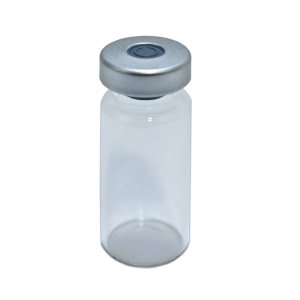
Vial Sterility Discussion

redsaint

Explorer
Joined
Apr 30, 2026
Messages
11
Reaction score
0
Location
Malta
I’ve been checking out vials to buy for filtering and came across a video from Peptide Critic:

View: https://youtu.be/Bl_HPyBANwU

From what he found, it looks like a lot of the “sterile” vials being sold online are really just sterile glass and sterile stoppers bought separately, put together, and then dropshipped by a third party. Those parts started out sterile, but once they’re assembled there’s no way to be sure they stayed that way.

That’s a serious issue, and it basically means filtering doesn’t accomplish much. His take is that if you’re going to go through the trouble of filtering, you may as well spend more on the pricier vials that are guaranteed sterile and come with COAs. For the US, he points to ALK, if you can track them down.

On paper, all of this tracks for me. Curious whether you all feel the same?
 
redsaint said:

I’ve been checking out vials to buy for filtering and came across a video from Peptide Critic:

View: https://youtu.be/Bl_HPyBANwU

From what he found, it looks like a lot of the “sterile” vials being sold online are really just sterile glass and sterile stoppers bought separately, put together, and then dropshipped by a third party. Those parts started out sterile, but once they’re assembled there’s no way to be sure they stayed that way.

That’s a serious issue, and it basically means filtering doesn’t accomplish much. His take is that if you’re going to go through the trouble of filtering, you may as well spend more on the pricier vials that are guaranteed sterile and come with COAs. For the US, he points to ALK, if you can track them down.

On paper, all of this tracks for me. Curious whether you all feel the same?
Is it odd that the ALK vials come without individual wrapping? Plus that box seems pretty weak. Throughout shipping, the rubber stoppers are left uncovered. Thanks for sharing, because I’ve been wondering about sterile vials too, but I doubt this is the solution.
 
The sterile glass vials from Amazon Ks-Tek cost fairly little, and each one comes sealed on its own. A plastic cap is also fitted on them.
 
Bioexplorer said:

The sterile glass vials from Amazon Ks-Tek cost fairly little, and each one comes sealed on its own. A plastic cap is also fitted on them.
I was on the verge of ordering Ks-tek, but the projected shipping timeframe to the EU is absurd 😆
 
Bioexplorer said:

The sterile glass vials from Amazon Ks-Tek cost fairly little, and each one comes sealed on its own. A plastic cap is also fitted on them.
Appearances.

Dig deeper into KS-Tek's sterility record and you'll find it all over the place — particulates you can see, tests that didn't pass, vials that leaked. Sure, they're inexpensive and easy to get, but I'm definitely steering clear.
 
catwitch said:

redsaint said:

I’ve been checking out vials to buy for filtering and came across a video from Peptide Critic:

View: https://youtu.be/Bl_HPyBANwU

From what he found, it looks like a lot of the “sterile” vials being sold online are really just sterile glass and sterile stoppers bought separately, put together, and then dropshipped by a third party. Those parts started out sterile, but once they’re assembled there’s no way to be sure they stayed that way.

That’s a serious issue, and it basically means filtering doesn’t accomplish much. His take is that if you’re going to go through the trouble of filtering, you may as well spend more on the pricier vials that are guaranteed sterile and come with COAs. For the US, he points to ALK, if you can track them down.

On paper, all of this tracks for me. Curious whether you all feel the same?
Is it odd that the ALK vials come without individual wrapping? Plus that box seems pretty weak. Throughout shipping, the rubber stoppers are left uncovered. Thanks for sharing, because I’ve been wondering about sterile vials too, but I doubt this is the solution.
That packaging choice seemed strange to me too — they come in containers resembling soda cans. As long as the contents remain sterile, though, I figure it's probably not a big deal, because we're cleaning the exterior regardless. What gets me is that they go to the trouble of guaranteeing sterility and supplying COAs, yet cut corners as much as possible on the packaging itself.
 
ultima thule said:

Bioexplorer said:

The sterile glass vials from Amazon Ks-Tek cost fairly little, and each one comes sealed on its own. A plastic cap is also fitted on them.
I was on the verge of ordering Ks-tek, but the projected shipping timeframe to the EU is absurd 😆
My order was placed with Ks-tek, and delivery took roughly 8 days?
 
ultima thule said:

Bioexplorer said:

The sterile glass vials from Amazon Ks-Tek cost fairly little, and each one comes sealed on its own. A plastic cap is also fitted on them.
I was on the verge of ordering Ks-tek, but the projected shipping timeframe to the EU is absurd 😆
Everything here came from Amazon. The 3ml, 5ml, and 10ml sizes arrived the following day. I placed an order Tuesday for 10 more of the 3ml, and they showed up Wednesday. I can't say for certain, but nothing visible is present in any of them. Later on, I'll take out 2 of the 3ml to reconstitute 2 R50's.
 
I think worries about Amazon vial sterility are exaggerated. Sterilizing properly isn't hard, so a well known vendor would be very short sighted to cut corners there. Occasional particles inside a vial seem more plausible, but if the vial is properly sterilized, what's the actual danger? If it can pass through a 30 gauge needle, it must be an extremely tiny particle.

To me, buying Peptides from unregulated gray market suppliers is already a real risk for all of us. Yes, you take part in group testing, but does that cover endotoxins? Can you be certain your vials truly come from the same batch as the test sample(s), or did the vendor blend sources and simply put the same number on all stock that month for convenience?

The much bigger risk seems to be the milligrams of actual substance being injected, not the minuscule chance of some theoretical vial contamination.

Also, let's not overlook the long term health risks of many of these Peptides with very limited human clinical data. Just trying to keep things in perspective. Personally, I have a fairly high risk tolerance.
 
Bioexplorer said:

I think worries about Amazon vial sterility are exaggerated. Sterilizing properly isn't hard, so a well known vendor would be very short sighted to cut corners there. Occasional particles inside a vial seem more plausible, but if the vial is properly sterilized, what's the actual danger? If it can pass through a 30 gauge needle, it must be an extremely tiny particle.

To me, buying Peptides from unregulated gray market suppliers is already a real risk for all of us. Yes, you take part in group testing, but does that cover endotoxins? Can you be certain your vials truly come from the same batch as the test sample(s), or did the vendor blend sources and simply put the same number on all stock that month for convenience?

The much bigger risk seems to be the milligrams of actual substance being injected, not the minuscule chance of some theoretical vial contamination.

Also, let's not overlook the long term health risks of many of these Peptides with very limited human clinical data. Just trying to keep things in perspective. Personally, I have a fairly high risk tolerance.

A lot of what you're saying could easily hold up. Still, that doesn't push me toward a "screw it, who cares about contaminants" mindset. In fact, because so many of those points might genuinely be accurate, that's precisely my reason for doing aseptic filtration into vials that carry certification from certified suppliers, and for using high-end syringes for injection — and for me, Amazon is not where any of that comes from. At minimum, I'm aware that what I'm making is a sterile product for my own use, cutting down whatever extra risk I can, given that the starting material is already admittedly dubious.

That said, everyone has their own way... Each of us is free to hold our own views and opinions.
 
Seems to me like there's an easy fix for this issue.

What's stopping you from getting vials that come sterile from the start?

Take a look:


d5b154c4e7821fe6df719d3e1848a95782080d72de45e2d8ee46f5c04fd0aee2.jpg


Ultra Spec Sterile 2ML (13mm neck) Clear Sealed Glass Vials


To get vials in sealed shrink wrap boxes, please order in multiples of 25 Ultra Spec Sterile 2ML-13mm Clear Sealed Glass Vial, Qty 1 ULTRA SPEC sterile depyrogenated vials are assembled with Teflon coated non-latex chlorobutyl rubber stoppers (conforming with USP<381>) and vials...

87b7f8a2f06cc5971911f5f7af324c274e3e19010545a729b559b4e30c4fe068.png


www.medical-and-lab-supplies.com


d991f1bc4fad40bf670d9722ca63e56fa9cde92460b503dc1f92b92845537b32.jpg


Pyrogen-Free Vials | Astor Scientific


Astor Scientific’s Pyrogen-Free Vials are manufactured and certified to be free of detectable endotoxins and pyrogens, ensuring reliable sample handling for endotoxin testing, pharmaceutical research, and sterile product preparation. Produced under strict quality control standards, these vials...

f0aae986da6843099e8c5f33f719da65a1f4560d3969fdb106968af36a5b5e77.jpg


www.astorscientific.us


012917a2dd697e11249a06398f1929800e5a8e413551c5b9295bdb1bda2bffcc.jpg


Sterile Empty Vials 10 mL Glass with Flip-Top Caps 10/Box


Explore Sterile Empty Vials 10 mL for lab storage, medication prep, and vaccine needs. Ensure safety and precision in every application.

0b8099c0fff30fbd81ebba76379bfbf4a02e4d4031093c66889be68bef1cc350.png


www.mountainside-medical.com
 
birdwhacker said:

Seems to me like there's an easy fix for this issue.

What's stopping you from getting vials that come sterile from the start?

Take a look:


View attachment 11102


Ultra Spec Sterile 2ML (13mm neck) Clear Sealed Glass Vials


To get vials in sealed shrink wrap boxes, please order in multiples of 25 Ultra Spec Sterile 2ML-13mm Clear Sealed Glass Vial, Qty 1 ULTRA SPEC sterile depyrogenated vials are assembled with Teflon coated non-latex chlorobutyl rubber stoppers (conforming with USP<381>) and vials...

View attachment 11103


www.medical-and-lab-supplies.com


View attachment 11104


Pyrogen-Free Vials | Astor Scientific


Astor Scientific’s Pyrogen-Free Vials are manufactured and certified to be free of detectable endotoxins and pyrogens, ensuring reliable sample handling for endotoxin testing, pharmaceutical research, and sterile product preparation. Produced under strict quality control standards, these vials...

View attachment 11105


www.astorscientific.us


View attachment 11106


Sterile Empty Vials 10 mL Glass with Flip-Top Caps 10/Box


Explore Sterile Empty Vials 10 mL for lab storage, medication prep, and vaccine needs. Ensure safety and precision in every application.

View attachment 11107


www.mountainside-medical.com
They only come in 2ml, though larger sizes exist. In fact, the 5ml option costs slightly less.
 

Attachments

  • d5b154c4e7821fe6df719d3e1848a95782080d72de45e2d8ee46f5c04fd0aee2.jpg
    d5b154c4e7821fe6df719d3e1848a95782080d72de45e2d8ee46f5c04fd0aee2.jpg
    25.7 KB · Views: 5
  • 87b7f8a2f06cc5971911f5f7af324c274e3e19010545a729b559b4e30c4fe068.png
    87b7f8a2f06cc5971911f5f7af324c274e3e19010545a729b559b4e30c4fe068.png
    8.8 KB · Views: 5
CycleSloth said:

If the sterility of your vials is in doubt, sticking them in a UVC sterilisation box is worth considering.
Over at Peppy's, this subject came up in a lengthy thread. Since UV light can't pass through borosilicate glass, it won't do anything for vials. Pen cartridges, on the other hand, can be treated this way. Buying vials that are already sterile and depyrogenated remains the better option.
 
I was under the impression that UV light was ineffective on cartridges too? Aren't those made of type 1 borosilicate as well?
 
WLBLD said:

I was under the impression that UV light was ineffective on cartridges too? Aren't those made of type 1 borosilicate as well?
Check out Peppy's. That thread contains 482 replies dating back to 2024. In it, people discovered that 265nm UV light caused UV detector strips within cartridges to glow, and they also talk about UV claves you can get on Amazon. There's also guidance there for converting your Insta pot into an autoclave if you want another option. STG has run some tests on this too, though that was some time back, so it may have been nuked.
 
Chili777 said:

WLBLD said:

I was under the impression that UV light was ineffective on cartridges too? Aren't those made of type 1 borosilicate as well?
Check out Peppy's. That thread contains 482 replies dating back to 2024. In it, people discovered that 265nm UV light caused UV detector strips within cartridges to glow, and they also talk about UV claves you can get on Amazon. There's also guidance there for converting your Insta pot into an autoclave if you want another option. STG has run some tests on this too, though that was some time back, so it may have been nuked.
I've come across discussions on this topic before, though I can't recall if that was the specific one. Great!! That's way more convenient than the instant pot + since I use it for cooking all sorts of meals, they'd likely end up smelling like food, ha ha
 
WLBLD said:

Chili777 said:

WLBLD said:

I was under the impression that UV light was ineffective on cartridges too? Aren't those made of type 1 borosilicate as well?
Check out Peppy's. That thread contains 482 replies dating back to 2024. In it, people discovered that 265nm UV light caused UV detector strips within cartridges to glow, and they also talk about UV claves you can get on Amazon. There's also guidance there for converting your Insta pot into an autoclave if you want another option. STG has run some tests on this too, though that was some time back, so it may have been nuked.
I've come across discussions on this topic before, though I can't recall if that was the specific one. Great!! That's way more convenient than the instant pot + since I use it for cooking all sorts of meals, they'd likely end up smelling like food, ha ha
Only certain models put out the proper wavelength, so you have to pick the right one. Over in that discussion, they also go over which versions are suitable. The primary thread is titled, "Sterilising 3ml cartridges. How do you all do it?".
 
Chili777 said:

WLBLD said:

Chili777 said:

WLBLD said:

I was under the impression that UV light was ineffective on cartridges too? Aren't those made of type 1 borosilicate as well?
Check out Peppy's. That thread contains 482 replies dating back to 2024. In it, people discovered that 265nm UV light caused UV detector strips within cartridges to glow, and they also talk about UV claves you can get on Amazon. There's also guidance there for converting your Insta pot into an autoclave if you want another option. STG has run some tests on this too, though that was some time back, so it may have been nuked.
I've come across discussions on this topic before, though I can't recall if that was the specific one. Great!! That's way more convenient than the instant pot + since I use it for cooking all sorts of meals, they'd likely end up smelling like food, ha ha
Only certain models put out the proper wavelength, so you have to pick the right one. Over in that discussion, they also go over which versions are suitable. The primary thread is titled, "Sterilising 3ml cartridges. How do you all do it?".
Thanks a lot!!
 
Back
Top