

PeptideConsumer
Explorer
Physical therapy is my trade, so postural issues and fresh workout routines are permanently on my radar, as are the exercises that correct them. Digging into how the musculoskeletal system actually works is what lets me understand the discipline properly.
Hip posture sits behind a great deal of what people read as a "belly".
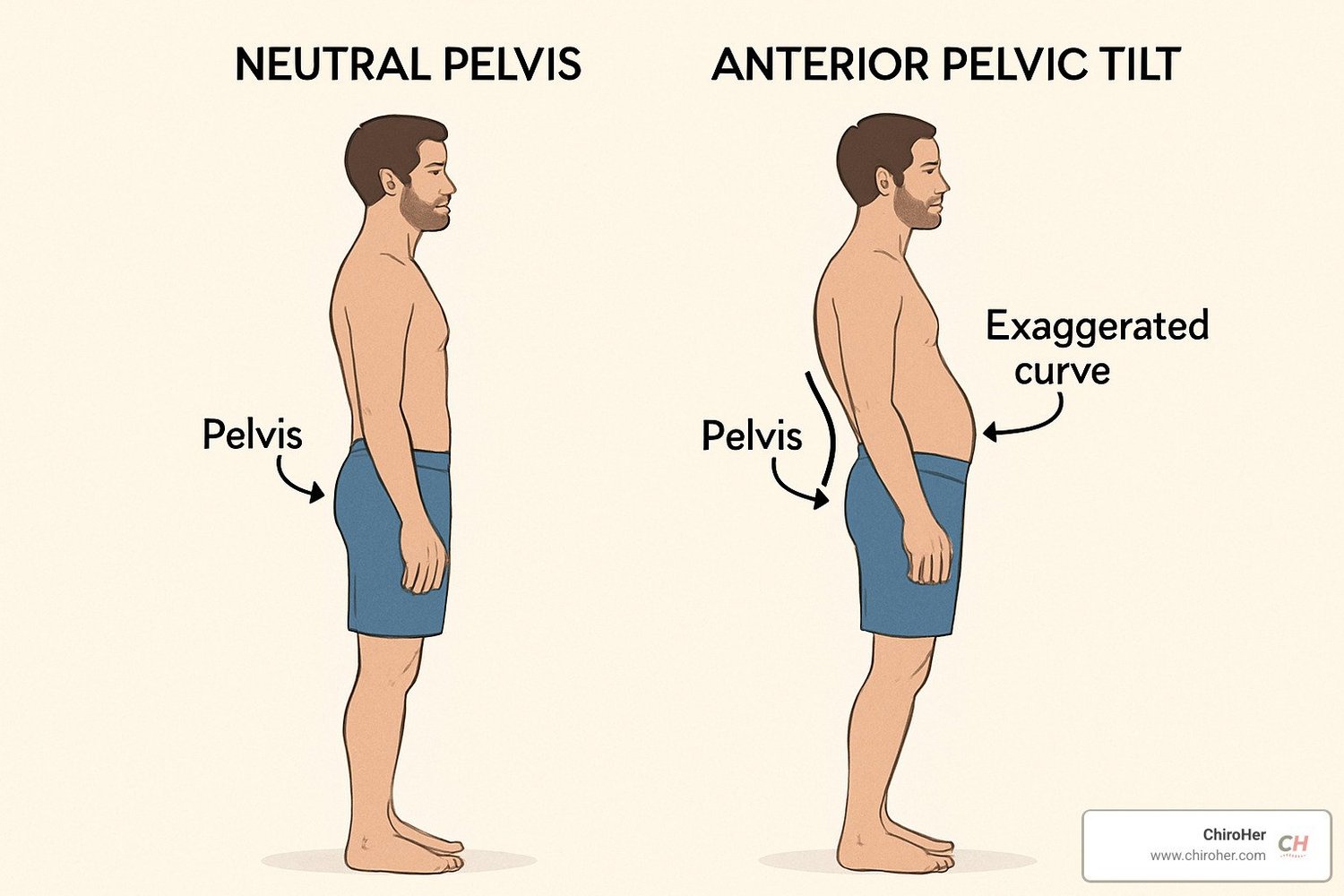
Pelvic tilt, anterior or posterior.
Plenty of blokes have visible upper abdominals yet cannot produce a full "six pack".
Lower back trouble can follow from this too.
The theory runs that strengthening the hip muscles connecting anteriorly (the abdominals) draws the anterior tilt back towards level alignment.
That reduces how much the lower gut protrudes, which reads as a better shape.
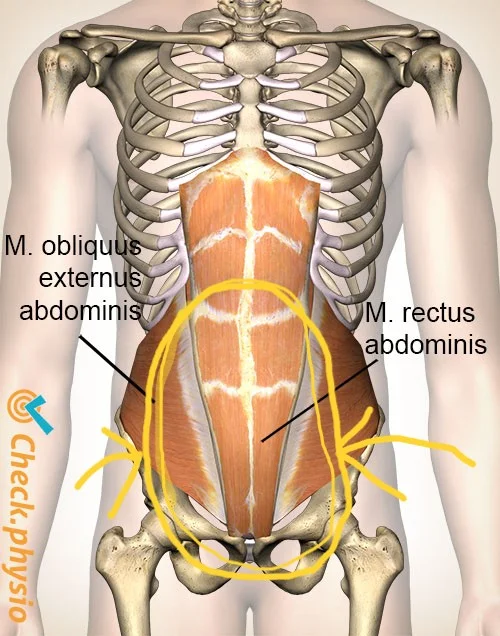
The circled area shows this muscle attaching to the anterior portion of the hip (pubic symphysis). Strengthen that lowest section of the abdominals, the theory goes, and the hip gets pulled out of anterior tilt, correcting the lower-belly-fat look.
The upshot: a full six pack rather than only the upper four.
It also deloads the lumber spine dramatically, often sorting out chronic lower back problems.
Hip posture sits behind a great deal of what people read as a "belly".
Pelvic tilt, anterior or posterior.
Plenty of blokes have visible upper abdominals yet cannot produce a full "six pack".
Lower back trouble can follow from this too.
The theory runs that strengthening the hip muscles connecting anteriorly (the abdominals) draws the anterior tilt back towards level alignment.
That reduces how much the lower gut protrudes, which reads as a better shape.
The circled area shows this muscle attaching to the anterior portion of the hip (pubic symphysis). Strengthen that lowest section of the abdominals, the theory goes, and the hip gets pulled out of anterior tilt, correcting the lower-belly-fat look.
The upshot: a full six pack rather than only the upper four.
It also deloads the lumber spine dramatically, often sorting out chronic lower back problems.