Glutathione and cancer???

Homer

Explorer
Joined
Aug 22, 2025
Messages
6
Reaction score
0
Location
Texas
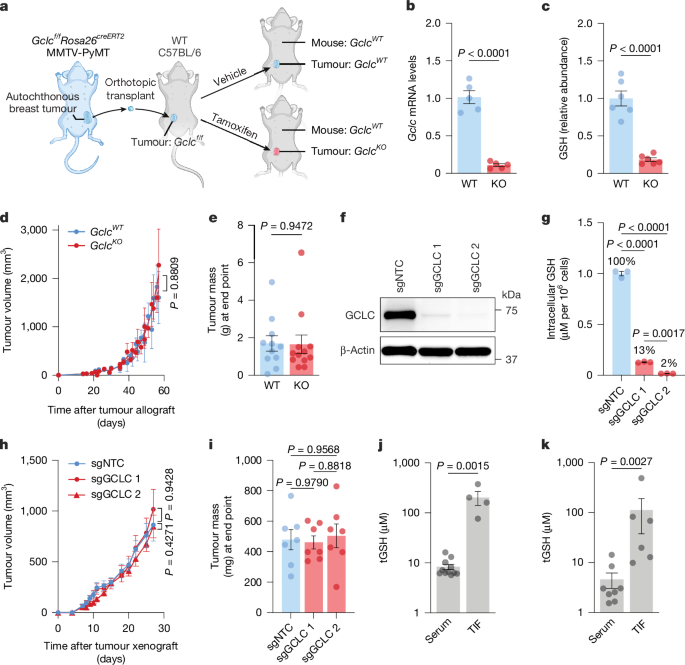
Did anyone come across that new Nature paper stating that "Supplementation with GSH (Glutathione) rescues cancer cell survival and growth in cystine-deficient conditions"? While going through it, the content was beyond my level of understanding, and I wasn't able to determine whether the delivery form (liposomal, reduced, oral, injectable) made any difference, though after working it through AI, the dose administered to lab mice translated to 13000mg daily for a 70kg person. Has anybody come across a more detailed analysis or comparable results??


c1e3830472b83136929225a7f48a7d2d1d4fa47b98a54a5b4983f89bb8510aac.png


Catabolism of extracellular glutathione supplies cysteine to support tumours - Nature


Catabolism of extracellular glutathione by γ-glutamyltransferases supports tumour growth and survival, and pharmacological targeting of these enzymes slows tumour growth.

a4f208e4f08396c003b764a087afb4011de329b67ff0fa5bb37ee068ab07778d.png


www.nature.com
 
Homer said:

Did anyone come across that new Nature paper stating that "Supplementation with GSH (Glutathione) rescues cancer cell survival and growth in cystine-deficient conditions"? While going through it, the content was beyond my level of understanding, and I wasn't able to determine whether the delivery form (liposomal, reduced, oral, injectable) made any difference, though after working it through AI, the dose administered to lab mice translated to 13000mg daily for a 70kg person. Has anybody come across a more detailed analysis or comparable results??


View attachment 10051


Catabolism of extracellular glutathione supplies cysteine to support tumours - Nature


Catabolism of extracellular glutathione by γ-glutamyltransferases supports tumour growth and survival, and pharmacological targeting of these enzymes slows tumour growth.

View attachment 10052


www.nature.com
Bookmarking this one.
 

Attachments

  • c1e3830472b83136929225a7f48a7d2d1d4fa47b98a54a5b4983f89bb8510aac.png
    c1e3830472b83136929225a7f48a7d2d1d4fa47b98a54a5b4983f89bb8510aac.png
    172.9 KB · Views: 3
  • a4f208e4f08396c003b764a087afb4011de329b67ff0fa5bb37ee068ab07778d.png
    a4f208e4f08396c003b764a087afb4011de329b67ff0fa5bb37ee068ab07778d.png
    1.2 KB · Views: 3
Before this study came out, glutathione looked like just another antioxidant supplement that cancer patients should avoid.

However, when cancer is active, there is an extra concern:

Our findings indicate a non-canonical role for GSH in supporting tumours by acting as a reservoir of amino acids.

Click to expand...

This means glutathione can act as a nutrient supply for breast cancer, and likely for other cancers as well.

A write-up about the research issues a comparable caution regarding taurine (which at minimum serves as a nutrient supply for leukemia):


https://www.biocompare.com/Life-Science-News/624653-Glutathione-Study-Reveals-How-Cancer-Exploits-Antioxidants/


The findings fit into a broader re-evaluation of how antioxidants interact with cancer. Harris pointed out that substances commonly viewed as benign or beneficial can be “hijacked” by cancer cells. For example, colleague Jeevisha Bajaj recently reported that taurine, another antioxidant found in foods, supplements, and energy drinks, can drive leukemia growth. Harris emphasized that these results do not mean people should avoid antioxidant-rich whole foods; rather, he cautioned against high-dose, unregulated antioxidant supplements, particularly glutathione, which “can present risks.”

Click to expand...

This definitely makes one stop and think, particularly for anyone with known genetic cancer risks. That said, cancer is extremely complex, so claiming "glutathione feeds breast cancer" or "taurine feeds leukemia" would be going too far, much like saying "sugar feeds cancer." Also, low glutathione levels are associated with diseases of aging, such as Parkinson's, COPD, liver disease, Alzheimer’s, macular degeneration, and cardiovascular disease.

Related discussions on Reddit:

 
I appreciate the details and the clear breakdown of certain aspects of these studies. My approach is to remain skeptical and dig into where the conclusions might be simplified or blown out of proportion (especially since the doses given in the trials look far too high to ever be used in people). Still, knowing what dangers any supplement might carry is valuable.
 
For boosting glutathione, taking NAC by mouth is the usual route, and many consider it the better long-term choice over glutathione injections.

Because NAC taken orally raises glutathione gradually rather than causing a sharp spike the way injections do, it might carry lower overall risk when used long term. That said, larger NAC doses can raise hematocrit, which is a concern for people already using TRT. On top of that, when it comes to NAC:

Gemini said:


Many focus solely on NAC, but supplementing with glycine (or collagen peptides) can sometimes allow for lower doses of NAC to be more effective by removing the other secondary bottleneck in synthesis.

Click to expand...
 
Cancer cells exploit whatever nutrients are available, and they can thrive on a wide range of them. If you're dealing with active cancer or have had cancer before, should you take it as a supplement? Absolutely not. That said, those aminos will show up in your food regardless. For someone in good health, taking it as a supplement isn't a problem at all.
 
DunningKruger said:

Cancer cells exploit whatever nutrients are available, and they can thrive on a wide range of them. If you're dealing with active cancer or have had cancer before, should you take it as a supplement? Absolutely not. That said, those aminos will show up in your food regardless. For someone in good health, taking it as a supplement isn't a problem at all.

Roughly 1 out of every 3 individuals will develop cancer at some point. That means cancer researchers never fully dismiss anything—even milk, since it can elevate IGF-1. Still, other risks deserve more attention: on-the-job contact with carcinogens, prolonged HGH use, and similar factors.
 
Calm Logic said:

For boosting glutathione, taking NAC by mouth is the usual route, and many consider it the better long-term choice over glutathione injections.

Because NAC taken orally raises glutathione gradually rather than causing a sharp spike the way injections do, it might carry lower overall risk when used long term. That said, larger NAC doses can raise hematocrit, which is a concern for people already using TRT. On top of that, when it comes to NAC:

Gemini said:


Many focus solely on NAC, but supplementing with glycine (or collagen peptides) can sometimes allow for lower doses of NAC to be more effective by removing the other secondary bottleneck in synthesis.

Click to expand...
I have to disagree — that isn't right. The issue isn't about raising glutathione levels, and NAC supplies cysteine just as effectively as anything else. The paper itself actually notes that NAC supported the cancer cells equally well. What the whole study emphasizes is that GSH acts as a cysteine store, and that store was deliberately limited in order to stop tumour growth. Cysteine is a conditionally essential amino acid, so it can become scarce while cells are proliferating, as happens with cancer.

Ultimately, the entire experiment rests on what GSH does within the tumour microenvironment — specifically, the extracellular surroundings of an active tumour that had been artificially implanted into mice.

In ordinary circumstances, GSH is a vital component of a healthy person. It fights oxidative stress, supports detoxification, aids liver function, and so on. Supplementing it has even been shown to be beneficial for health.

TLDR: if cancer is present, GSH may assist it by supplying cysteine. If there is no active cancer, it is an overwhelmingly helpful molecule.
 
One of the paper's title terms is extracellular: "Catabolism of extracellular glutathione supplies cysteine to support tumours"

Taking NAC by mouth serves to back up the intracellular production already in place. An injection of gluta, though, gets around the body's regulatory limits to some extent by flooding the extracellular space, much like what happens with skin whitening from long-term, high-dose use in South Korea. So ideally the shots carry more benefits than drawbacks, or they suit acute, short-term scenarios better.

In the same way:

Gemini said:


While the paper shows that tumors can scavenge cysteine from NAC just as easily as from GSH in a controlled environment, the real-world distinction lies in the regulatory gatekeeping of the body.

Oral NAC is processed by the liver and utilized through rate-limited enzymatic pathways, ensuring that cysteine is distributed according to cellular demand. In contrast, injections create an immediate systemic spike that saturates the interstitial fluid, providing an unregulated "free-for-all" of nutrients that tumors are specifically primed to intercept.

NAC: Promotes metabolic resilience by letting the cell stay in control.

GSH Injections: Bypasses cellular signaling, creating a high-energy extracellular "pantry" that favors the opportunistic metabolism of a tumor.

While glutathione is the "master antioxidant," high levels in the extracellular environment can occasionally act as a pro-oxidant. In the blood, high concentrations of GSH can react with "free" copper or iron ions. This reaction can actually generate superoxide radicals, causing temporary oxidative stress to the lining of your blood vessels—the exact opposite of the intended goal.

Click to expand...
 
Back
Top